
Category: Uncategorized

  • Pecking Order

    Resplendent in white sequins, flapper fringe trembling with movement, silver bride-to-be sash cutting across her chest, and a headdress of white and silver plumage, she stood in the center of the room like something to be admired.

    The bride-to-be was her best friend. Not from similarity, just proximity. Next door since childhood, she allowed her to hang around, lingering, uninvited but necessary. They were close enough that one life bled into the other. Close enough that leaving had never quite been an option.

    It had started with compliments. Your hair is so beautiful, you should wear it down. You’re pretty when you smile. Then, in their teens, the tone sharpened, pecking words, in her ear, every day. 

    Stand up straight. Peck.

    Don’t wear that. Peck.

    Smile, you always look mad. Peck.

    It had started as guidance. Somewhere along the way, it stopped feeling like that.

    In high school, it was always the same refrain. The 1920s were perfect. Glamour, danger, freedom. She talked about “Gatsby” like it was scripture.

    “Daisy Buchanan is misunderstood. I wish I could be her.” she’d said once, dreamy but certain.

    “Vapid and selfish? Of Course.” The thought flickers, stays. Never spoken out loud.

    Imagine F. Scott Fitzgerald came to these very caverns when it was a speakeasy. He was so dashing, debonaire. So RICH.

    “Illicit affairs, drinks, gambling. Sounds like destiny.” Pops in her head. Feels right

    A memory slips in, familiar as breathing. A comforting voice, low, certain, never asking twice.

    “Don’t let her make you small. Stand up!”

    A story repeated so often it wore grooves in her mind. Whispered rumors. Cruelty mistaken for pride. Gunfire. A girl in uniform who didn’t stay a victim. Never sure what parts are true.

    The cavern smells of damp stone and old liquor.  It clings to everything, hair, clothes, memory. The past didn’t fade here. It waited. It seeped.

    So she worked here. Of course she did. 

    Just as she had done all her life, she didn’t refuse the bride’s demand for a 20’s themed bachelorette party. Debt had a way of disguising itself as loyalty. Dressed in her black flapper waitress uniform, dull and dingy, she was a stark contrast against a bevy of swans. A stain.

    The Great Patsy.

    Sitting at the bar, she peers through Don Julio 1942, psychedelic light veins the glass, writhing like something alive beneath the surface. Pulling her into the void. The world beyond it pulsed, slowly oozing. The amber liquid through crystal distorts reality.

    That’s the life blood.” she thought. The bartender looks away as she tips the glass back. Tequila burns, dragging down her throat like it resists being swallowed. For a moment she holds it there, she feels it move, familiar, clawing, and… reassuring. Like something inherited, a birthright.

    Then it was gone. Wait, no, it never really leaves.

    She sets the glass beside the half-full bottle carefully, as though the void would widen and everything would fall in. The tequila feeds her. Sharpening her senses to a knife’s edge. Stripping away something softer. It was her real companion. Chosen. Faithful. The only thing that never asked her to be smaller.

    “Hey bestie,” the bride-to-be sings, all glitter and lacquered sweetness, “this place is perfect.” A pause, eyes sweeping critically. “Can you make sure the bartender stocked the right liquor? And the food, make sure it’s perfect.”

    A quick peck on the cheek. Too light to refuse. Too sharp to ignore. “I hoped you’d wear something new, softer.”

    Disdain. Peck. 

    Something in her jaw tightened, but she smiled. Of course she smiled. Debt. Always debt.

    The bartender watches her long before he speaks. Measuring, anticipating.

    “I know you have been with her a long time but…”his voice low, smooth like aged whiskey. No humor. Not even an attempt at it. “She’s a real treat.”

    He pours again. His fingers brush hers, deliberate this time. A fraction too slow. A fraction too knowing. Not the first time her hand had been guided. Arms extend, finger squeezes. 

    Pop.

    This time he doesn’t look away when she drinks. 

    “You’ve been very patient with her.”

    Not a question. His gaze flicks, briefly, to the dark throat of the tunnel behind the bar. Then back to her.

    “I wonder how long that can last.”

    The drinks flow. The flock draws closer, orbiting the bar, bright and expectant. The bride at the center, as always. Time flies, then slows. Pulling in and out like breathing.

    The cavern presses in. The cacophony of sounds, oppressive, circling.  Ain’t Misbehavin’ warbles from somewhere unseen, the pitch dipping and stretching like a record left too long in the sun. Girls in flapper dresses laugh too loudly, reality stretched too wide, snapping at the edges. Jagged. Like too many teeth. 

    Like the bride. Always tearing at her flesh, gnawing at her very essence so she is left with nothing but a dark, misty outline of herself. A Raven to a Swan.

    Peck. Peck. Peck.

    Her fingers curl tighter around the glass.

    In front of her a gaggle of geese, all costumed in white, led to slaughter. Stupid. Fragile. Easily broken.

    A flock. Prey pretending not to be.

    Bird brains, all of them.

    The thought brings a private, sardonic smile to her lips.

    The ebb and flow of the gathering is like a river, sometimes fast, mostly slow and lazy. The bevy comes and goes. Always centering around the eye, like a hurricane. She waits on the edge, electricity runs down her spine. Pressure builds.

    Another drink. This time not alone. Bodies press in as the bartender pours. The bride pushes forward with the rest, radiant, expectant, already accustomed to being served, to being admired. Never needing to notice what it cost. 

    “This used to be a speakeasy,” the bartender begins. “People came here to feel like nothing could touch them. Liquor flowed freely. Jazz echoed through these caverns. Vice was king. This was an exciting place, even a little dangerous.”  

    The bartender doesn’t move. He stays behind the bar but close enough that she can feel the heat of him, steady and grounding in a way nothing else was. Anchoring.

    “And right there is where the table stood that fateful night.” He didn’t point. He didn’t need to. Everyone’s eyes drift to the same spot. The end of the bar exactly where the bride stood.

    Beneath her feet the stone was darker. Not stained exactly but like it remembered.

    “All four of them,” he continues, “laughing. Drinking. Just like you are now.” Their heads bob, looking around.  Exchanging uneasy glances.

    The bartender leans into her slightly. “History doesn’t repeat,” he says under his breath. “It waits.”

    She knew this tale. Echoes in her brain, familiar but somehow serrated and surreal.

    “For someone willing. Someone who already carries it.” 

    A pause.

    “Bang! The gunfire erupted.” He barks, they all jump and squawk.

    The first wrongness barely registers. The music skips. Just once. A heartbeat misfiring. But he feels it. She knows he does. His hand stills on the bar. His eyes lock on hers. Not surprised. Anticipating.

    An infection spreads, tugging at her memory. 

    “The waitress was in the back room,” he continues, his penetrating gaze sliding through them, landing somewhere deeper in the cavern, beyond her, beyond the bar. “She heard every shot. One after another.” He motions with finger and thumb slowly at each one of them. “Pop… Pop…Pop…” He hesitates, looks at the bride, “Pop.” he gestures directly at her. A small gasp comes from ruby lips.

    Her fingers twitch as though muscle memory. A flash of pain. A whispered revenge.

    A faint sound echoes from the tunnel behind the bar. Not quite a pop. Not quite anything. Subtle enough no one reacts to the reverberation.

    “When she ran out,” the bartender says softly, leaning over the bar, “they were already dead. Slumped where they sat. No overturned chairs. No signs of struggle.”

    One girl lets out a thin, uncertain giggle, then quickly swallows it.

    “No one came past her,” he whispers. “No one went in.” He pauses, everyone holding their breath, “No one went out.”

    A shadow slips along the cavern wall, fast, smooth, soundless. 

    At the bar, she twitches with recognition. Understanding. She feels the crumbling certainty of reality.

    “So…” the bartender’s lips curve, just barely, “…whoever killed them…”

    A rush of air. A harsh, violent scream ripping through the cave. Black wings explode overhead, beating the air into a cold, torrid frenzy.  The gaggle below scatters, shrieking, stumbling. Not graceful now. Not untouchable. Just bodies pushing, stumbling, trying to get away.

    The Raven Caws.

    Something brushes past her cheek.

    Wet. Cold. Gone.

    Not feathers.  Something old, possessed of weight and ill intent. It had lingered, if only for the smallest fraction of a second, familiar. 

    Her breath comes shallow now, though she can’t recall having drawn it so. A glass of amber in her hand, tequila bottle now barely occupied, tipped, the void ripped.

    Around her, the panic swells and breaks in waves. Sharp cries, the clatter of glass, the wild insistence of bodies seeking exit. The music, that warped and languid thing, does not cease but drags on, lower now, slower, as if submerged. Distorted. Drowned. Stretched.

    Her vision narrows. The bride stands frozen, wide-eyed, the world still bending around her. Waiting for someone else to fix it. Someone always did. Of course she wasn’t running. She never had to. But, her scream pierces above all others. Targetable.

    Peck. Peck. Peck. 

    Now Prey.

    The bar presses solid against her hip. The glass in her hand trembles once, then stills. The bartender doesn’t look at the others. He doesn’t shout. He doesn’t reach. He watches. Only her. 

    “Funny thing,” he says almost conversationally, “about places like this.”

    His fingers tap against the bar top. Not nervous. Rhythmic.

    “They remember what they’re owed.”

    His eyes lift to hers, steady, piercing, certain.

    “And so do people.”

    A slow heat curls low in her gut. Not fear. Recognition. Hunger, perhaps. Her fingers now squeeze the glass so tight a fracture splinters through the crystal. Blood wells. Feed me. The thought slips through her…settles easily.

    “Go on,” she whispers.

    The world stutters. It doesn’t stop.

    It rewinds. Aligns.

    The music drags backwards. Laughter unravels, sucked into nothing. Glass reforms midair. Her hand, Uncut. Whole. Breath pulls into lungs that had already exhaled.

    Pop! Pop! Pop!

    The cavern snaps back. A presence behind her shifts. Heavy. Familiar. A hand over hers, gnarled and bony. Steady, pointing, sure. Her grandmother’s voice, gravel and rot. Repeating the story. A man sneering at a woman in a uniform. A replacement all in white. Revenge. Death, grim and red. Being pushed on a swing. Pop! Family legacy. Pop! Retribution. Pop!

    All memories, fuzzy, unbalanced. Not hers… yet. A chance is given to reject a story shaped to carry the legacy. 

    Behind her, the screaming fractures into something raw and human. No longer sharp. No longer pecking. Just fear.

    The gun rests on the bar. When she looks at it, her reflection stares back at her in the warped metal. Not a raven. Not yet.

    The bartender exhales slowly beside her. Almost a sigh. Not impatience. But with expectation.

    “You don’t have to rush,” he whispers. Then ever so gently, “But you don’t have to wait anymore either.”

    Something softer flickers. A memory, laughter on a summer night. Shared secrets. A hand reaching for hers in the dark.

    “You can stay with me,” the bride had once said. No sharpness. No pecking. Real. Enough.

    The screaming continues behind her. Fragile. Human.

    Her hand hovers. The bartender says nothing. He just waits. This is not his choice. It never has been.

    The weight of the gun settles into her hand. Right. Balanced. Earned. No ghost guides her. No past forces her. 

    This is hers. All of it. Her finger curls around the trigger.

    The cavern holds its breath. And when the sound comes, it is clean. Sharp. Decisive.

    She exhales and smiles.

    And this time, when the music skips it is because she likes the sound.
  • The Takeover

    Europe, 1481

    “God forgive me. It works,” Evaine whispers, her youthful face reflected in the burnished tin bowl.

    Deliberately she writes: mercury, sulphur, iron, and honey. Then carefully etches the sigil. The stone and recipe vanish into an oak box bound in brass, small enough to fit in her palm. Kingdoms would burn to possess it. 

    New York, 2026

    “There’s been an attempted takeover.” 

    Sunshine catches skin still untouched by age.

    She had buried husbands, watched plague carts rattle over cobblestone, stood in silk before kings erased by history. She could still smell London: smoke, horse blood, rainwater, and tincture. 

    She remembered the first time she drank the Elixir.

    No sickness. No aging. No weakness of flesh. The body renewed endlessly. But the mind remained painfully human, carrying centuries like chains.

    “The parties responsible believe this is a biotechnology firm.” Eva studies her partner, gauging his reaction. He nods, knowing the consequences.

    The small box rests beside her. A forgotten relic no museum would ever claim. In five hundred and forty-five years, she has never dared translate the symbol carved inside. 

    Every alchemist before her had failed. They believed immortality could be stolen like gold from a vein. 

    The Elixir demanded consent. That was the cruelest part. The last ingredient was the lifeblood of someone, willingly sacrificed.

    No force, no trickery, no stolen blood would answer the formula. 

    “They cannot be allowed to reproduce it. If they open the box without me present…burn this building to the ground.”

  • The Last Garden of Rose Woods

    Ominous clouds roiled overhead. But the rain never came. Clouds gathered slowly, day by day, thickening until the sky became a single unbroken mass. It felt as though the clouds were pulling the water up from the earth instead.

    The news talked about it. Scientists studied it. The cloud cover grew so dense you couldn’t tell night from day. Then the water vanished. Rivers emptied, reservoirs cracked, and the lights went out. Hydroelectric plants failed. The grid collapsed.

    Rose stood at the edge of her once-beautiful garden and knew there wouldn’t be one this year. She had tilled the soil anyway, like she always did. It remained rich, dark, damp. At night, animals wandered freely, desperate for anything green. Even if she coaxed something to grow, it wouldn’t last until morning.

    She sat on the bench, forehead resting against the rickety table, when she heard footsteps on the porch. Heavy. Deliberate. Too loud for a world that had gone so quiet.

    She looked up as a man in a military uniform approached.

    Rose pushed herself upright with a tired sigh. The man didn’t hesitate. His boots struck the warped boards in a steady rhythm. Up close, his uniform wasn’t dirty so much as worn in a way that suggested no system remained to replace it. The insignia on his chest had been scratched, almost deliberately.

    “Rose Woods?” he asked.

    She nodded. “Who’s asking?”

    “Someone who still believes this place matters.”

    “That’s a short list.”

    “It is.” He held her gaze. “I’m a geologist. And a gardener. We’ve been searching for a cause—solutions. We found an anomaly here. In your garden. Beneath it.”

    The word lingered.

    Rose frowned. “That’s what they call everything they don’t understand.”

    Fatigue flickered across his face. “Fair. But this one is different.”

    “How?”

    Instead of answering, he stepped off the porch into what had been her garden. The soil shifted under his boots, not quite dust, not quite earth. He crouched and pressed his palm against it, as if listening.

    “With your permission, we’d like to dig here.”

    Rose didn’t respond immediately. Her gaze drifted over the neat rows she had turned by hand days ago, out of habit more than hope. The soil looked the same as it had since the clouds came: dark, fine, faintly damp.

    “You said you’re a gardener,” she said.

    He nodded.

    “Then you understand why I haven’t let anyone touch it.” She stepped beside him, her boots sinking slightly. “This soil… it’s wrong.”

    She crouched and pushed her fingers into the earth. It parted easily. When she lifted her hand, it clung, not as mud, not as dust. Something in between.

    “It never dries,” she said. “Not since the rivers went. But it doesn’t feed anything either.” She brushed her hands together. The soil fell away in soft clumps. “I planted seeds. Dozens. They didn’t rot. They didn’t sprout. They just… stayed.”

    He moved closer and pressed his palm to the disturbed patch. He stayed there, still.

    “What are you doing?” she asked.

    “It’s warmer,” he murmured. “Not surface warmth. Deeper. Like…” He hesitated. “Like circulation.”

    A chill crept up her spine.

    “So dig,” she said, sharper than intended. “Do it.”

    They started by hand. The soil gave way easily, piling in neat mounds. Then they hit something. Metal. Not a rock. Not debris. A straight edge.

    He cleared it carefully, revealing a flat, pitted surface—discolored, but unmistakably shaped. Equipment. Old. Older than anything deployed since the outage.

    “I’ve seen this alloy,” he said quietly. “Survey tools. Early response teams.”

    Rose stared. “They never came here.”

    He didn’t reply.

    Instead, he worked around it, trying to free it. But the deeper he dug, the less it seemed buried and the more it appeared embedded, like metal softened and fused into the earth itself.

    He stood slowly, staring into the pit. “We need proper equipment.”

    The machine arrived the next day.

    A squat, fuel-powered digger. The mechanical arm swung out and plunged into the soil, lifting heavy scoops and dumping them aside. Again. And again.

    Then came a low grinding sound. Not from the machine. From below. The ground shifted. Not collapsing. Shifting.

    Rose saw it first. The soil tightened around the digger, drawing inward. Not loose earth giving way, something pulling together. The machine lurched as one tread sank, like the ground had liquefied beneath it. The operator tried to reverse, but the rear treads spun uselessly. Soil clung to them, thickening, climbing.

    The machine began to sink. Not falling. Being taken.

    The arm jerked upward as if resisting, but the base continued downward—slow, inevitable. Metal groaned. The frame warped as pressure closed in from all sides. The engine choked, sputtered, died.

    Silence rushed back. Then nothing remained but a shallow depression.

    The soil settled. As if the machine had never existed.

    Rose’s throat tightened. “What… was that?”

    His eyes stayed fixed on the ground studying the place where the machine disappeared.

    “It’s not attacking,” he said quietly. 

     “Then what is it doing?”

    “Correcting.”

  • Dead Man’s Hand

    I consider myself a purveyor of hard-to-find goods. I roam from village to town scouring for specific items for my clients. When I find an untold treasure, I liberate it from its captor to be returned, to whoever pays the most.

    I was approaching Little Bigton, across the river from Big Littleton, when I smelled it. The village announced itself long before its crooked rooftops broke over the hill. The wind carried its perfume across the fields in greeting.

    The streets were alive. A baker carried trays of golden loaves from his oven. A butcher hosed yesterday’s work into the gutter, where it mingled with mud and whatever else had given up. Yeasty beer bubbled somewhere nearby. Fragrant fruit and meat pies cooled on windowsills. 

    Chickens strutted like they owned land. Pigs disagreed with property law entirely.

    It was a glorious assault on the senses. Every breath offered a choice: honey cakes or horse dung, fresh herbs or livestock, roasting meat or something that had very recently stopped being meat. 

    Little Bigton smelled terrible. Little Bigton smelled wonderful. I might appreciate it more if I didn’t suspect my brother would be sniffing around for the same dead man’s hand.

    I was here on behalf of a wealthy benefactor. Wealthy benefactors are remarkably similar to pigs. Feed them and they grow affectionate. Starve them and they grow loud.

    Mine had become very loud indeed.

    The object was rumored to be somewhere in Little Bigton. Whether it rested in a merchant’s strongbox, a widow’s attic, or beneath a pile of turnips in the market, I intended to find it before sunset.

    The only lead: the object had last adorned the hand of an old man hanged in Little Bigton.

    The gallows stood on a low rise beyond the market square, where practical matters were conducted at a respectful distance from lunch. I followed a crooked lane uphill, stepping around a goat that seemed determined to challenge all passing traffic like a toll collector.

    The gallows was currently unoccupied, save for a few crows. They watched me as though I had interrupted something important. The wood creaked in the wind. A small shed leaned nearby. A weathered sign listed crimes and punishments in handwriting that suggested literacy was optional.

    A man sat beneath it, whittling.  Old enough to have opinions. Young enough to share them.

    “You looking for someone?” he asked without looking up.

    “Possibly.”

    “Alive or dead?”

    “Recently dead.”

    He nodded.

    “That narrows it down considerably.”

    I tossed him a copper. His hand moved faster than I would have expected. The coin vanished.

    “An old man was hanged here three days ago,” I said. “Thin. Gray beard. Unusual jewelry.”

    The knife stopped.

    “A fella with strange rings?”

     Now I had his attention. 

    “Where did they take his body? Did anyone claim him?”

    He rolled the coin between his fingers. “Depends who you ask.”

    “I am asking you.”

    “Then I’ll give you the expensive answer.”

    I sighed and produced another coin.

    “After the hanging, the body disappeared.”

    “Disappeared?”

    “That’s the story.”

    “And the truth?”

    “The truth is, things disappear in Little Bigton. You understand?”

    “And where would it have gone?”

    He nodded downhill toward the market.

    “That’s where it gets interesting. Half say his widow cut him down. Half say the undertaker took him first.”

    “And which half do you believe?”

    He grinned. “The half that pays.”

    I left him beneath the gallows.

    Two stories. One corpse. Not bad.

    A third possibility occurred to me.

    Valuable objects have a remarkable tendency to travel. Especially when professional liberators such as myself are involved.

    As I descended into the crowded streets, a pig screamed in outrage at a personal betrayal by a chicken and I almost stumbled upon them as I stewed. 

    Where to go first? The widow. The undertaker. Sentiment or opportunity. Experience favored opportunity. I headed for the undertaker.

    Every village has a grave digger. They are usually found near the cemetery outside a church. And the church was impossible to miss. It loomed over Little Bigton like a King in a beggarly court.

    A path of uneven stone led to the cemetery gate. The air changed from the rich chaos of the market into something much earthier. Dead grass, turned dirt and cold stone. 

    The gate complained when I pushed it. Everything here seemed to have an opinion.

    Halfway up the path, I saw him. He was kneeling beside a newly dug grave. A spade rested nearby. Dirt still clinging to its blade.

    I stepped closer. “I’m looking for a body. Recently hanged. Old man. Jewelry that caused trouble.” 

    “Ah,” he said. “That one.”

    I waited. In this line of work, silence is just another currency.

    He finally straightened, brushing dirt from his hands.

    “There are three kinds of bodies in Little Bigton,” he said. “Those that stay where they’re put. Those that are taken. And those that decide they’re not finished yet.”

    “And him?”

    “That depends on who you ask.”

    A crow landed on a nearby headstone and watched us with interest. I suspect it had heard this conversation before.

    “You took him,” I said.

    “I prepared him,” he corrected gently. “There’s a difference. Preparation is expected. Removal is… negotiated.”

    “While preparing him, did you notice a ring? A green stone. Set like an eye?”

    “You are not the first to ask. There’s another in the village. Foreign sort. Paid in advance.”

    I exhaled slowly.

     Alister. 

    Last I heard he was practicing his magic for some lowly lord in the north.

    The words came out before I could stop them.

    “May a thousand turds rain upon his smug face!”

    The undertaker backed away a bit.

    “Now, now, lassy. That’s not talk for a lady.”

    I hesitated.

    “…He is my brother,” I said.

    The undertaker’s expression shifted. You could see the careful recalibration of someone deciding how much trouble they were willing to stand near.

    “Well,” he said at last, slowly, “that does complicate things.”

    A crow agreed from his perch on the headstone.

    I hadn’t meant to say it aloud. Worse, I hadn’t meant for it to matter. Siblings have a way of doing that. They turn otherwise clean transactions into something with edges.

    “He wasn’t always a magician,” I added, more to reclaim control of the conversation than out of interest in sharing. “He was just Alister. Then he learned things that made him unbearable.”

    The undertaker nodded like a man who had buried plenty of people who were unbearable.

    “He bought the body,” he said.

    “Of course he did.”

    “With instructions.”

    That made me pause. “Instructions?”

    The undertaker glanced back toward the grave he’d been working on, then lowered his voice slightly, as if the soil might be offended by gossip.

    “Specific ones. The jewelry was not to be removed by ordinary hands. The corpse was not to be seen in daylight. And under no condition be buried before the third night.”

    A cold shape settled behind my ribs.

    “And when is the third night?”

    He studied me for a moment, then pointed with his spade toward the village, where smoke curled lazily from chimneys and life continued its symphony of rot and bread.

    “Tonight.”

    Of course it was. 

    There were two ways to proceed.

    Find Alister or find what he thought he had already secured.

    My patron wanted a dead man’s hand with the signet ring. Simple. Superstitious. Profitable.

    But if Alister was involved, then the hand was no longer an object. It was a key.

    And Little Bigton, for all its chaos and livestock and competing smells, had just become a lock about to be opened.

    There was little sense in chasing him all over Little Bigton. Night would fall soon enough and I knew where I would find my dastardly brother. Everything he did needed darkness and shadows and his dabbling in necromancy would serve him well here.

    As night came, I situated myself outside the cemetery. A rattling sound caught in the wind. Allister was on the move. I could hear the shuffling of feet, the walking dead. Not sure how he slipped past me, I swore before I could stop myself.

    “Saints spit on my luck. He will probably bite the finger off before I can get there and lick his own after.” His proclivity towards the macabre was a known commodity.

    I needed to get to the corpse and the hand.

    I crept silently through the graveyard until I found them perched around the fresh grave. 

    Alister stood controlling an animated corpse. He held his hands in a coaxing motion propelling the dead man forward. 

    Alister held out a knife by its tip and the body reached for it. The blade gleamed in the moonlight. As the corpse awkwardly gripped the hilt, Alister made a cutting motion. Slowly, what used to be a man began to hack at his hand.

    Alister shook his head in disgust and indicated the other hand. I stifled a laugh. Specifics were never important to Alister. I was surprised when he tried his hand at magic. A very precise endeavor. Probably why he was working for a minor nobility.

    The corpse took several minutes to sever its hand. It made a glopping sound as it hit the ground. In a movement quicker than I thought him capable of, Alister swooped up the hand in a velvet cloth. Making sure not to touch the flesh, he placed it in a side pocket. Finished now with the corpse he dropped his hands and the body fell into the hole.

    Ever so pleased with himself, Alister walked toward the gate.

    I waited until he was halfway across the cemetery before moving. Alister was many things, smug, arrogant and unbearable but he wasn’t stupid. I kept my distance through the sleeping village.

    I tread lightly up the stairs, being careful to avoid the creaky areas that complained underfoot. He of course was in the kingly suite, meaning the attic where no one else could be. I pressed an ear to the door as he began his bedtime ritual, just like clockwork. I settled in for a long wait.

    In true Alister fashion it took him forever to settle into sleep, but eventually light snores emitted from the other side of the door. I gently tiptoed into the room. He was asleep face up on the bed with both hands covering the coveted prize. As I crept toward the bed, a floorboard creaked. 

    I stopped like a statue with my hand extended toward the bed. Holding my breath, I watched my brother twitch and mumble as his hand rose in gestures I didn’t understand. I trembled in place hoping his subconscience couldn’t complete the spell. After a long pause, Alister began to snore with an open mouth.  I resisted the urge to stuff something in his gaping maw.

    I slid my fingers gently under his. In a subtle scooping motion, I pulled the covered hand toward me. The velvet cover began to slip away. I quivered knowing that the touch of the dead flesh would be the end of me. I pulled anxiously on the cloth. Alister twitched again. He wasn’t the sound sleeper from childhood.  For the third time I cursed him. With one last effort, the hand slipped from his grip and clattered to the floor.

    Startled Alister sat upright. His eyes blazed a golden hue and an unearthly voice emitted from his chest.

    “Who dares?”

    With a relieved sigh, I answered. “Tis just me, the wee sister of your heart.” 

    This was familiar territory of a game we played as children. Leave it to him to booby trap his body instead of the room.

    His voice lowered and his eyes closed. “It is just you and I am here to protect you.”

    He always thought that. He never expected I wouldn’t need it. I backed out of the room, treasure in hand. 

    Fleeing Little Bigton, I felt the darkness press behind me, urging speed. The sooner I could rid myself of the hand the better.

    I would see Alister again soon.

  • The Man Who Moved In

    Grief didn’t arrive after my mother died.

    He’d been there before that. No black cloak, no hollow eyes. Just a person, thin and quiet, wearing the same clothes as yesterday and the day before. He didn’t introduce himself. He didn’t have to. I knew who he was the way you know a storm is coming even before the clouds gather. He sat watchful in waiting rooms, bedsides, standing in the corner during quiet conversations that no one wanted to finish. 

    But after she died, he stopped pretending to be a stranger. He moved in.

    Not metaphorically. He took up space. He sat in her chair without asking. He walked the hallway at night like he knew the layout better than I did. I’d turn a corner and nearly run into him lurking there, and he’d just steady me, like this was normal now.

    “You shouldn’t be here,” I told him the first week.

    He didn’t say anything. He didn’t argue. He just picked up her coffee mug from the sink and held it like it meant something. That was the worst part. He handled her things with recognition. Not curiosity. Not reverence but recognition. As if he has always known her.

    He turned the mug slowly, his thumb resting over the faint crack along the handle. Her favorite mug, the one she never would throw away.

    “She kept this.” His voice, quiet and reflective.

    “She kept everything.Even what other people would’ve replaced.”

    He nodded, like that confirmed something.

    He followed me out into the world. He anticipated me. At the grocery store, behind the older lady trying to scan her tomatoes, struggling to use that “new-fangled” technology, tears streaming down my face as I help her. She pats my hand as he just stares hard into my eyes.

    At the red light, I reach for my phone to call her before remembering. This time he didn’t look at me when my hand froze in midair. He just rested his palm over mine, not to comfort me, just to keep me from shaking apart.

    “You’re making this worse,” I said once.

    He finally spoke, his voice low and even. “No. I am making it stay.”

    *******

    Days passed, then weeks. I noticed that he wasn’t always heavy. Sometimes he was almost gentle.

    Like the afternoon I went through the old recipe box. My hands shook as I held the one I always asked for on the holidays. Grief came close, not looming this time, but careful. He stood beside me as I traced her handwriting. For that moment I didn’t feel like I was going to break apart. I felt like…she was near. There were extra notes in the margins that I didn’t remember. Make this as a special treat. Add extra sugar, just because.

    My throat tightened.

    “She wrote this like she was talking to you.” Grief whispered.

    “She always was. Even when I didn’t notice.”

    *****

    There was something else he carried. Not in objects, not in whole memories. Fragments.

    A missed call I let ring. A visit I shortened. A conversation where I nodded more than I listened. He brought them to me without warning, sharp, painful.

    “You could’ve stayed longer.” He said.

    I didn’t argue. In those moments it felt undeniable.

    “I was busy. I thought I had more time.” I said, shaking my head with guilt and denial.

    He tilted his head, giving me a penetrating look. “Now you know.”

    That was the problem.

    Grief didn’t live in the past. He lived in the present, armed with hindsight, turning ordinary moments into something that felt like neglect.

    One night while sitting near my bed as I tried unsuccessfully to sleep he said, “She needed you.”

    “I was there.” I answered, too quickly.

    He held my gaze.

    “Sometimes.”

    That word hollowed out everything else.

    “Why do you show me these?” I cried.

    He didn’t answer right away. He was just quiet, long enough to matter.

    “Because these are the ones you won’t let go of.”

    He was right. I was the one holding them in place, turning them over and over, looking for the proof of my feeling that I failed her. As if love required perfection to count. For the first time, I could feel an easing.

    “She didn’t keep score.”

    He actually smiled, but didn’t answer.

    The fragments didn’t disappear.  They changed. They stood among other things now. Long dinners, small jokes, quiet moments that hadn’t seemed important enough to remember until they were all I had left.

    Grief shifted beside me, not lighter, just less certain.

    *****

    One evening, I found myself sitting on the edge of her bed, a memory pressing in sharper than the others. Not a big one and not important by most standards. Just me, years ago, saying nothing. And she is sitting beside me anyway.

    Grief leaned against the doorframe.

    “She didn’t ask you to explain,” He said.

    “No. She was patient. She just stayed.”

    “That’s why I do too.”

    That is when I started to understand what he was. Grief isn’t pain, Pain is sharp. It peaks and it breaks. It ends, eventually. Grief is preservation.

    He kept everything exactly as it was the moment she stopped existing in the world. Not frozen in time, worse than that. Alive, but unreachable. He carried her laugh in the wrong rooms. Her voice in the wrong hours. Her absence in places where her presence had been so ordinary it once felt invisible. He made sure I didn’t lose her completely. But he didn’t let me have her, either.

    ****

    I stayed busy. I worked longer hours, trying to drown him out. I went out with friends. He sat there between us, making every smile or half-hearted laugh feel false. I drank hoping to blur the edges. He didn’t blur, he sharpened. Time passed, but not the way people say. Nothing healed. That word started to feel obscene, like suggesting that the absence of her was a would that could close. It was really an amputation. There was no version of me that was able to grow back what was gone.

    Some mornings I woke up in tears. Grief was there. He didn’t shrink, he expanded. He sat up straight and held my hand as I cried.

    One evening out with friends I actually found myself laughing. Not politely, but a full on belly laugh. It came out of me without permission, full and real and somehow I felt it was wrong.

    I turned to him accusingly, “Did you see that?”

    He nodded.

    “Does that mean she is…further away?”

    “No.” He replied, “You are.”

    That hit harder than anything else had so far. I had been measuring my love by proximity to pain and sorrow. As if staying devastated was proof that she still mattered, As if moving forward was some kind of abandonment. Grief had never asked me to stay broken. He had only refused to let me forget.

    *****

    The last time I asked him if he would leave, I had finally gone through her things. Not just glanced at a drawer or a box but actually looked at them and processed them. Then I put them away. The air suddenly didn’t feel like it was suffocating me. It just felt…occupied. Like something left an imprint instead of a hole.

    “So you are not leaving me.”

    “No.” He said with finality.

    But this time, I heard the rest of the meaning behind his answer. 

    No, because I am what remains when love has nowhere to go. No, because losing her didn’t end love. No, because if I leave, so does the evidence that she was ever here in the way that mattered. 

    I saw him then for what he was. Not an intruder, nor a burden, a witness.

    Now when I see him, he doesn’t reach for me. He doesn’t have to. I have learned how to carry some of it myself. The memories, the absences, the sudden collides with a past that still insists on existing in a present she’ll never enter again. Sometimes he disappears for hours, once almost a whole day, and then something small happens. A smell, a phrase, a sound and he is back beside me. Not apologizing, just continuing. Because that is what he is.

    Grief is not an obstacle, not an ending but the ongoing proof of love. Love doesn’t vanish. It changes form and sometimes, if you are paying attention, it looks like a person who refuses to stop walking with you, no matter how far you think you’ve come.

  • Stories and Contests

    I wrote all of these stories from finding writing contests online. It took me a while to find somewhere to let out what little (she says modestly, looking through her eyelashes) creativity I have.

    Each story was written according to a prompt given by the contest. The first one I wrote was Catwalk Cattiness and the prompts were: Crime (Genre) Fashion Show (Place) and Wine Bottle (Thing).

    Each contest has a word limit so the shortest story out here was write a story of 100 words or less with a twist ending. For someone like me who talks a lot and does the same in prose, this was the hardest one I did.

    I have 4 other stories waiting on Judgement and fhttps://writingbattle.comeedback but it is a wonderful way to get writing again. I have never won the contest but I have placed in all of them. That gives me motivation to write more!

    Here are some of the writing sites and contests I have found and entered:

    https://writingbattle.com

    https://reedsy.com/creative-writing-prompts

    https://fictionprize.worldhistory.org

    https://fusilliwriting.com

    https://www.wow-womenonwriting.com/contest.php#FlashFictionContest

    I recommend trying out the Reedsy prompts because they are a weekly contest. I will update more links as I find them.

    Thanks for stopping by!

  • Catwalk Cattiness

    Catwalk Cattiness

    “Person, place, or thing?”

    “Really Max? You always lose this game.” She laughed. “I predict that the next call is all 3. A Person at a place tied to a thing!” 

    The radio squawks, “10-10 at 49 Chambers Street. Missing model.”

    Mina grins and reaches for the mic. “347 responding” 

    “Damn,” he replies, “You might be right. Fucking fashion week.”

    Pulling up to Hall des Lumieres, he double parks, they exit, all business now.

    A slender man out front is ringing his hands talking to a strikingly beautiful blonde wearing an outrageous outfit that resembles a banana. They rush up.

    “Please hurry!” A shrill voice shouts.

    “This Way!” A breathy girlish gush.

    The detectives follow them, past milling crowds, past the catwalk, to the cacophony in the dressing rooms behind.

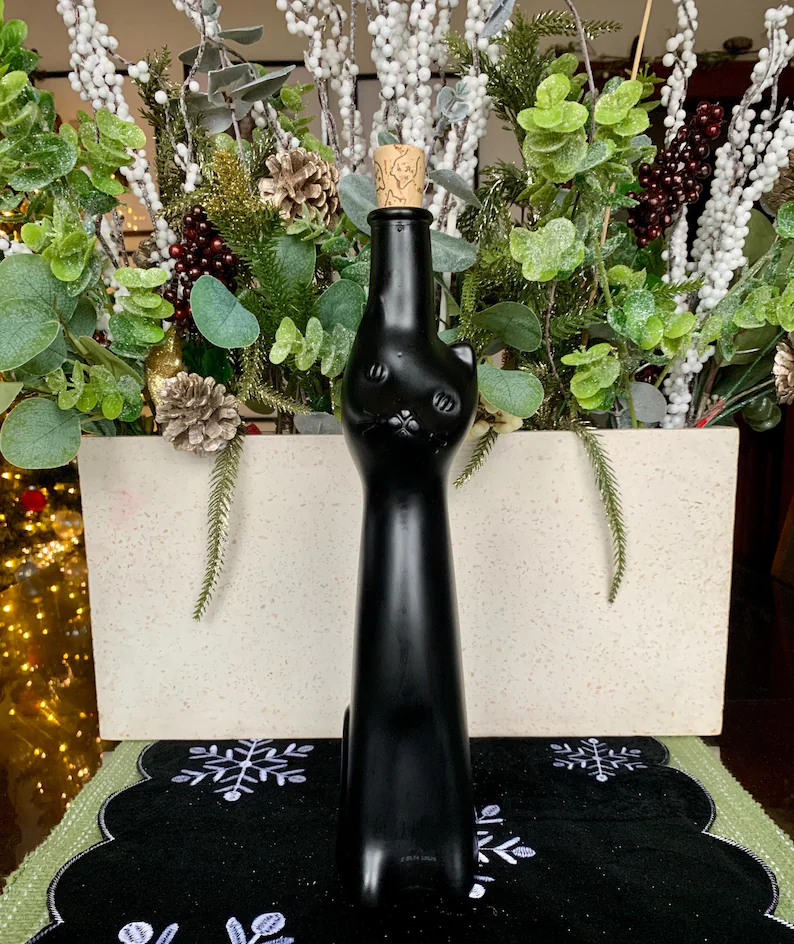
    “She was right here,” The banana spins the chair around to reveal a black bottle shaped like a cat with a note taped to it. “She turned into a bottle of wine!” The banana shakes her head disbelieving.

    The detectives pull on gloves, reaching for the bottle. The note reads “Look between the Wines.”

    “Clever.” Mina chuckles, “Someone likes puns.” 

    Slenderman says, “This show is sponsored by Gallo wines. Ebony Le Chatte is the spokesmodel for them. When she missed her cue for the finale we knew something was wrong.”

    “Who was the last one to see her?” Max questioned. The banana timidly raises her hand.

    “I walk the runway right before her. She was sitting there fixing her chapeau.” She points to the vanity. “The clapping from the crowd was so loud but I am sure I heard her walk up behind me.”

    Raising the cat-shaped bottle with the label reading Black Cat Riesling, Mina asks “What about this? Is this a Gallo wine?” 

    “No.” Slenderman answers. “That’s a competing brand. They have been trying to steal Ebony from Gallo. To try and woo her they have been sending her bottles of that wine for weeks!”

    “Looks like they finally succeeded.” Max shakes his head. “Dumb. Leads us right to them.”

    “Yeah, maybe too obvious. Snatching her isn’t the best business move.” Mina turns to Banana and Slenderman.. “Is there anyone who has a grudge against Ebony?”

    “Ebony wasn’t always the most pleasant person. A lot of the models envy her, try to emulate her or outright try to steal her jobs. She’s vicious to the pretenders, wanna be’s and such and known for her cutting remarks. Someone could want her gone to take her place as the spokesmodel.” Slenderman answered.

    Banana pipes up, “Blanca Chienne.”

    “Who or what is a Blanca Chienne?”

    “She is the lead, the second most influential model in the runway show and Ebony’s fiercest competitor.” Slenderman replies.

    “Where is she now? We need to speak with her.” Mina demands, looking around the room. Slenderman gestures to an almost white haired Amazon past the first rack of Haute Couture. 

    Max waggles his eyebrows at Mina as he walks to the model.

    “Miss Chienne?” 

    She nods her head regally and says with a slight accent, “Oui, I am Blanca. Have you located the Wicked Witch of the West?”

    “Must be best friends with Ebony, eh? Do you know anything about her disappearance?” Max questioned.

    “I know she is an attention seeking sneak who will steal jobs and stab you in the back. But I wish nothing but good fortune to her.” She quips. “I did encourage her to go with Black Cat winery. It fits her witchy personality.”

    “Where were you when she disappeared?”

    “In front of an appreciative crowd of hundreds at the end of the catwalk.”

    Max looks over to Slenderman and he nods, “She is the lead Model and goes out first in the finale.”

    “Is there any surveillance here?” Mina interjects.

    Slenderman shakes his head. “Not in the dressing room but at all the doors outside this room.”

    “We need to see the doors from this room at the time of the disappearance. Can you get them for us?”

    “Yes,” Pulling out his phone, Slenderman begins to type. “Here is the footage from the Finale and all the doors in and out of this room.” He hands the phone to Mina.

    Mina watches the screen intently, pausing on Blanca, striding across the catwalk, her posture perfect. Zooming in, a figure appears at the dressing room door as the finale begins.

    “Max, look at this,” she murmurs.

    “That’s… Ebony, right?” Max asks, his voice low.

    “Could be.Hard to tell, but it looks like her.”

    Max nods, “So, she’s been hiding in the dressing room all this time?”

    “Maybe.” Mina looks over at Slenderman. “You said the doors outside are covered. Is there anything unusual in the footage?”

    Slenderman shakes his head. “Not that I can see. The footage is clean.”

    Mina hands the phone back to Slenderman and turns to the room, eyes scanning the area like she’s trying to read a map. 

    Max crosses his arms. “Too many clues, too clean. Too obvious… maybe it’s all a distraction.”

    “Distraction from what?” Mina asks, intrigued.

    “From the real motive,” Max replies, eyes narrowing. “What if Ebony’s disappearance isn’t about her career or the rivalry? What if it’s about something else entirely?”

    “Like what?” Mina challenges.

    Max raises an eyebrow, thinking it over. “Could be personal. Something deeper.”

    “She has been depressed.” Chimes Banana. “Her cat died this week.”

    “Her cat? Her cat died, Black Cat Winery…There could be a connection.” Mina begins to pace, trying to put the pieces together. 

    Banana sadly looks around “Ebony used to bring her cat here with her. He was one of those funny hairless ones. You know, with all the wrinkly skin. He looked so cute sitting with her drinking that wine for the past week of rehearsals. Yesterday after the last bottle of wine he just fell asleep and died.” Tears begin to leak from her eyes.

    And to Mina and Max, just like that the puzzle pieces fit.